Kunstatelier Omanut

Website Redesign and Accessibility Case Study

Kunstatelier Omanut is a Jewish art studio and day center in Berlin supporting people with intellectual disabilities and mental health conditions. I redesigned its outdated website from the ground up, with a strong focus on accessibility and inclusion, and built the entire site myself using Jimdo, a no-code platform with limited customisation options, while considering German data protection requirements.
RoleSole UX/UI Designer and Front-End (Jimdo)
DateSeptember - October 2026
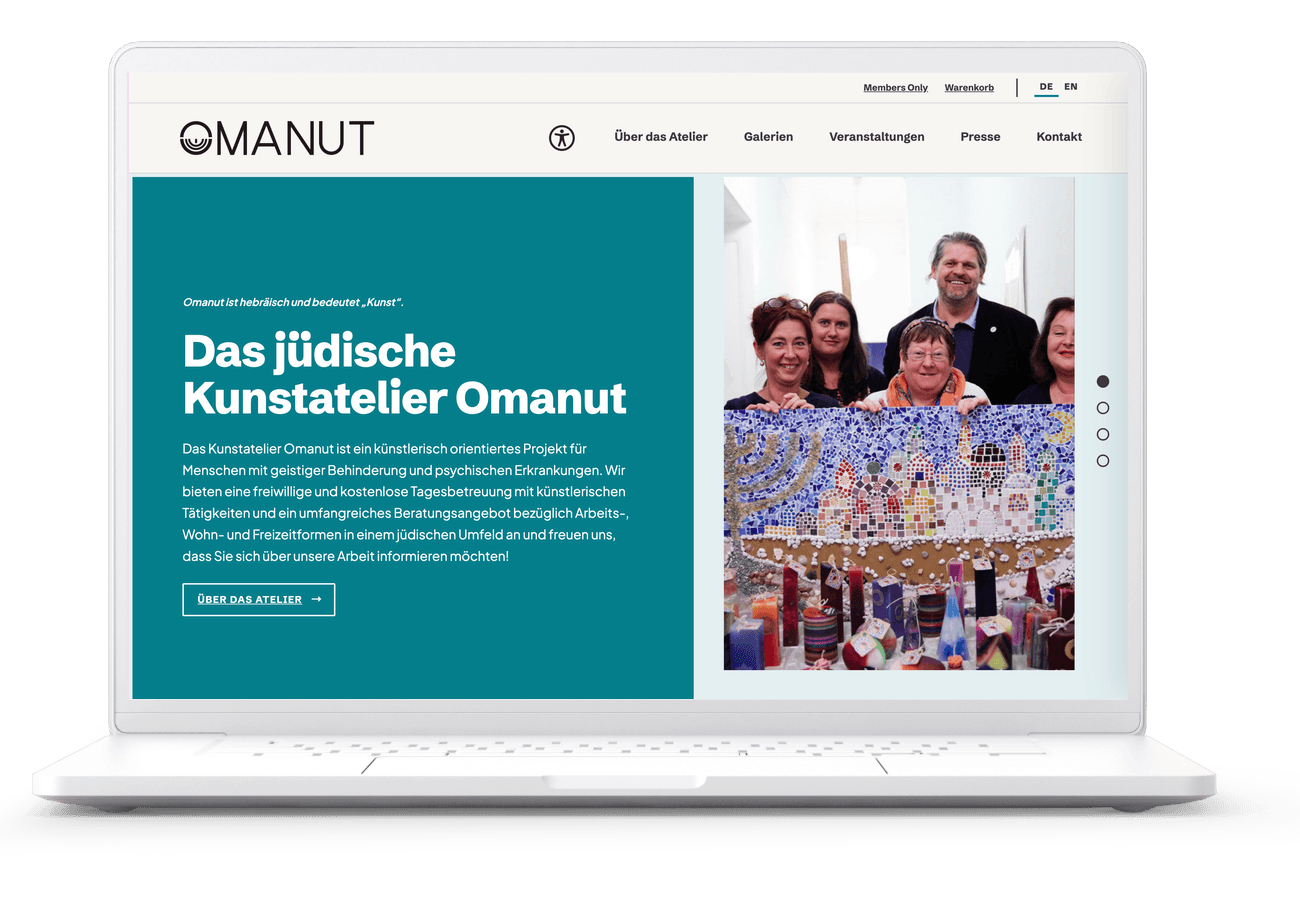
Homepage of kunstatelier-omanut.de on a laptop: teal intro panel with the title "Das jüdische Kunstatelier Omanut" next to a photo of the studio team behind a mosaic.

Problem Statement

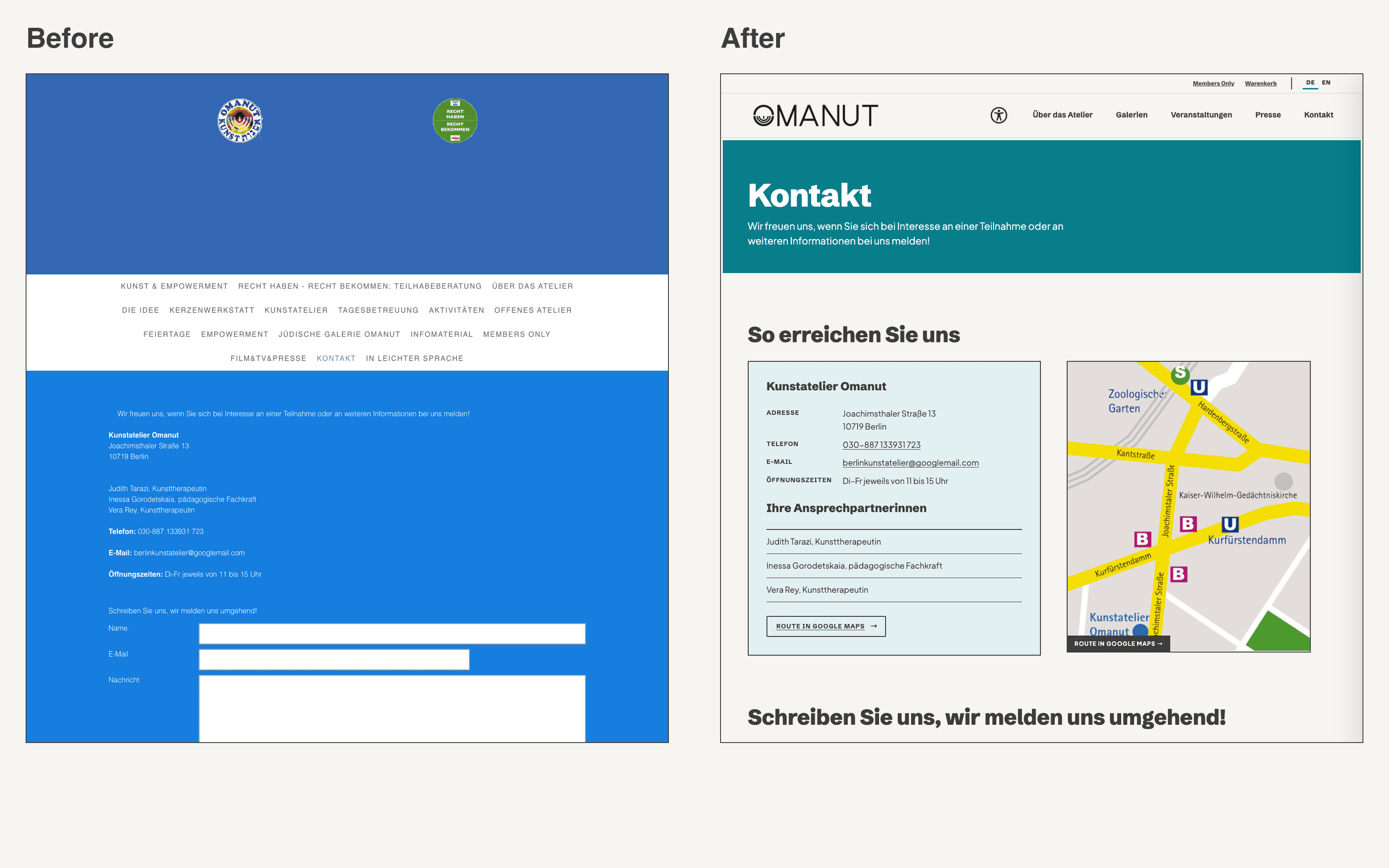
The old website hid a warm, colourful studio behind a flat blue template from another decade: 16 undifferentiated menu items, a Facebook-blue button, no real logo and no hierarchy. For the people it serves (participants with intellectual disabilities or mental illness, their families, funders and staff), it was hard to navigate and never made clear what to do next.

The Solution

Complete redesign with accessibility in it's core

A new site that is calm to read, accessible by default and respectful of visitors' privacy, built entirely inside Jimdo's limits.

Tools

FigamJimdoHTML/CSSClaude CodeLanguageToolAffinity Photo

ReBrand Design

Type
Icons
Logo
Colours

The Product

From 17 menu items to 5

The old site buried everything in a flat menu of 17 items. I grouped its 37 pages with a card sort and cut the menu to 5 clear items, moving Members Only and the shop into a small strip above. Contact details now sit together in one card instead of loose lines of text.

Photos lead

Visitors could not see what the studio actually makes. The Galerien page now leads with large photos in a card grid: one short text and one button per area, each leading to its own gallery. A yellow circle opens behind the photo on hover, and the galleries are photo strips that scroll sideways.

Events at a glance

The old site had no events page, so visitors could not tell what was on. Veranstaltungen now puts the current exhibition first, with the poster, the date and a button that adds it to the visitor's calendar, followed by regular activities and past exhibitions.